
 WhatsApp
When an Internal Committee (IC) concludes an inquiry under the Sexual Harassment of Women at Workplace (Prevention, Prohibition and Redressal) Act, 2013 (PoSH Act) and finds a respondent guilty, its final report frequently includes directions for monetary compensation or deduction from salary under Section 13(3) read with Section 15.
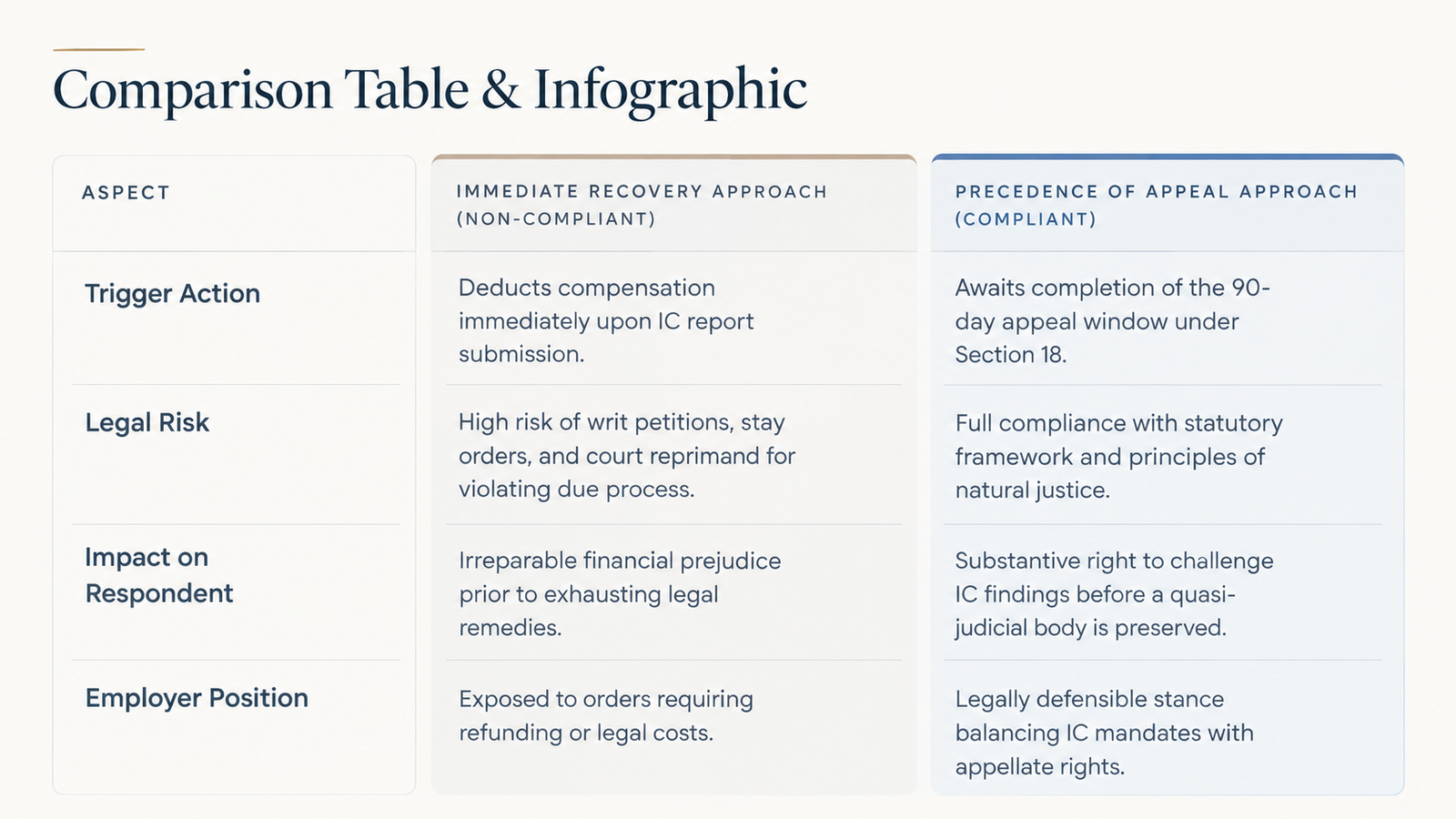
For employers and HR leaders, the immediate instinct is often to enforce these financial directions straight away—either by withholding pay, deducting amounts from final settlements, or initiating recovery procedures. However, high-court jurisprudence consistently reiterates a vital procedural safeguard: the statutory right of appeal guaranteed under Section 18 takes precedence over the immediate execution of monetary compensation orders.
Executing financial penalties or recovery mechanisms before the statutory 90-day appeal window expires—or while a properly filed appeal is sub-judice—violates fundamental principles of natural justice and statutory due process.
Understanding the Statutory Framework: Section 13 vs. Section 18
To understand why immediate recovery is legally vulnerable, organizations must distinguish between an IC's recommendations and their statutory enforceability during the appeal period.
- Section 13(3) & Section 15 (Recommendations and Compensation): Upon completing an inquiry, if the IC arrives at a conclusion that the allegation has been proved, it recommends to the employer to take action for sexual harassment as a misconduct and/or deduct from the salary or wages of the respondent such sum as it considers appropriate to be paid to the aggrieved woman.
- Section 18 (Right to Appeal): Any person aggrieved by the recommendations made under Section 13(3) or implementation/non-implementation of such recommendations has a statutory right to prefer an appeal before the designated Appellate Authority (such as an Industrial Tribunal, Labour Court, or authority prescribed under service rules) within a period of 90 days from the date of the recommendation.
The Conflict
Employers often face a dilemma: Should they immediately implement the IC’s monetary recovery recommendations upon receiving the inquiry report, or wait out the 90-day period?
Judicial precedents confirm that enforcing a financial recovery recommendation during the pendency of the appeal period renders the statutory remedy under Section 18 illusionary. Once monetary compensation is deducted and disbursed, reverting the status quo if the Appellate Authority later modifies or sets aside the IC report becomes extremely difficult and prejudicial to the appellant.
Judicial Precedents: Right to Appeal Must Be Meaningful
Indian High Courts have repeatedly restrained employers and administrative bodies from executing coercive financial steps while the statutory right to appeal remains available or pending.
- Protection of Statutory Remedies: Courts have ruled that an administrative or employer action that precipitously enforces a penalty before the expiration of the 90-day limitation period under Section 18 infringes upon the aggrieved party's legal remedy. The right to file an appeal is a substantive legal right, not a mere formality.
- Maintenance of Status Quo: Where an appeal has been duly filed within the 90-day period, courts routinely hold that coercive steps—such as salary deductions, recovery notices, or withholding of earned benefits—should remain in abeyance until the Appellate Authority considers interim relief or adjudicates the appeal.
- Prevention of Irreparable Injury: Monetary recovery initiated prematurely can inflict irreversible financial and reputational harm on an employee before they have had an opportunity to present their case to a judicial or quasi-judicial tribunal under Section 18.
Practical Implications for Employers, HR, and Internal Committees
This legal stance creates clear operational boundaries for organizations during the post-inquiry phase:
- Distinguish Operational Actions from Financial Recoveries: While an employer may implement administrative or preventive measures—such as changing reporting lines, transferring parties, or initiating disciplinary warnings—financial deductions or monetary compensation recoveries must be handled with strict adherence to the Section 18 appeal timeline.
- Avoid Premature Salary Deductions: HR and payroll departments must not process immediate lump-sum salary deductions toward compensation awards until the 90-day statutory appeal window has elapsed, or until the Appellate Authority passes an explicit order.
- Communicate Timelines Clearly: The cover letter accompanying the service of the IC Inquiry Report to both parties should explicitly inform them of their right to prefer an appeal under Section 18 within 90 days.
Key Compliance Takeaways for Organizations
- Issue the Report Promptly: Serve the final inquiry report to both the complainant and the respondent simultaneously, establishing an unambiguous, verifiable date of receipt from which the 90-day limitation period begins.
- Institute a Standstill Period for Financial Recovery: Maintain status quo regarding monetary deductions during the 90-day window allowed for filing an appeal under Section 18.
- Seek Legal Clarity Upon Notice of Appeal: If the respondent serves notice that an appeal has been filed before the competent Appellate Authority, hold all monetary recovery proceedings in abeyance pending directions or interim orders from the tribunal.
- Align Internal Disciplinary Policies: Ensure organizational PoSH policies and HR manuals clearly reflect that financial recovery directions are subject to the statutory appeal mechanism under the PoSH Act, 2013.
Conclusion
The PoSH Act aims to create safe, equitable workplaces while ensuring robust procedural fairness for all parties involved. While the law mandates strict redressal of workplace sexual harassment, it equally guarantees that statutory rights of appeal are protected. By respecting the precedence of Section 18 over immediate monetary execution, employers protect their organization from legal exposure, avoid premature coercive actions, and ensure full adherence to natural justice.
Strengthening Your PoSH Compliance & Appellate Governance
Navigating the procedural nuances of the PoSH Act—from conducting fair inquiry proceedings to managing post-inquiry execution and appeals—requires expert legal precision. Premature enforcement actions can expose organizations to court litigation and compliance failures.
At Poshaw, we support organizations, HR teams, and Internal Committees in building end-to-end, legally sound PoSH frameworks. Whether you need expert External Members on your IC, comprehensive IC training, or guidance on complex inquiry protocols and post-inquiry compliance:
- Website: www.poshaw.in
- Email: info@poshaw.in
- Phone: +91 9773831359 | +91 9999415757