
 WhatsApp
When an employee steps forward to report workplace sexual harassment, they do so at an immense personal and professional risk. Beyond the physical and emotional toll, the fear of social stigma, workplace retaliation, and career damage often acts as a massive deterrent. This is precisely why PoSH complaint confidentiality is not merely an administrative courtesy or a matter of corporate etiquette—it is a strict statutory mandate under Indian law.
Recent administrative reiterations by public governance authorities—such as directives emphasizing absolute secrecy surrounding complaints filed by women against harassment—bring a critical compliance spotlight back to how organizations handle sensitive disclosures. For employers, HR leaders, and Internal Committees (ICs), safeguarding this data is a core legal obligation with severe penalties for non-compliance.
The Legal Framework: What Does the PoSH Act Say?
Under the Sexual Harassment of Women at Workplace (Prevention, Prohibition and Redressal) Act, 2013, maintaining discretion is woven directly into the statutory framework.
Section 16 of the PoSH Act, 2013
The core legislative anchor for confidentiality is Section 16. It explicitly prohibits the contents of the complaint, the identity and addresses of the aggrieved woman, respondent, and witnesses, any information relating to conciliation and inquiry proceedings, and recommendations of the IC or the action taken by the employer from being published, communicated, or made known to the public, press, or media in any manner.
Crucial Distinction: Section 16 creates a statutory shield against public disclosure. However, it provides a narrow exception: information may be disseminated regarding the justice secured to a victim under the Act, provided that the identity of the parties and witnesses is strictly protected.
Why Confidentiality Breaches Happen (And How They Damage Organizations)
Despite clear legal language, breaches of confidentiality are surprisingly common in corporate and public sector environments. They typically occur due to:
- Informal Watercooler Talk: Casual discussions among managers or HR representatives sharing "updates" about an ongoing internal inquiry.
- Flawed Investigation Logistics: Conducting interviews in open-plan offices, scheduling calendar invites with explicit titles, or leaving physical files unsecured on shared desks.
- Retaliatory Leaks: Intentional leaks designed to pressure a complainant into withdrawing a grievance or to publicly damage a respondent before findings are finalized.
The Repercussions of a Breach
When confidentiality fails, the fallout is multi-layered:
- Legal Penalties & Liability: Breaching confidentiality can attract penalties under service rules or organizational codes of conduct, and exposes the employer to claims of breach of privacy and a failure to provide a safe, secure work environment.
- Chilling Effect: Future victims lose faith in the internal grievance redressal mechanism, driving reporting rates down and escalating legal exposure externally.
- Compromised Inquiries: When details leak, witness testimonies can become tainted, documents tampered with, and the absolute neutrality of the IC inquiry called into question.
Practical Compliance Steps for HR and Internal Committees
Ensuring airtight confidentiality requires more than good intentions; it demands systematic operational controls throughout the lifecycle of a complaint.
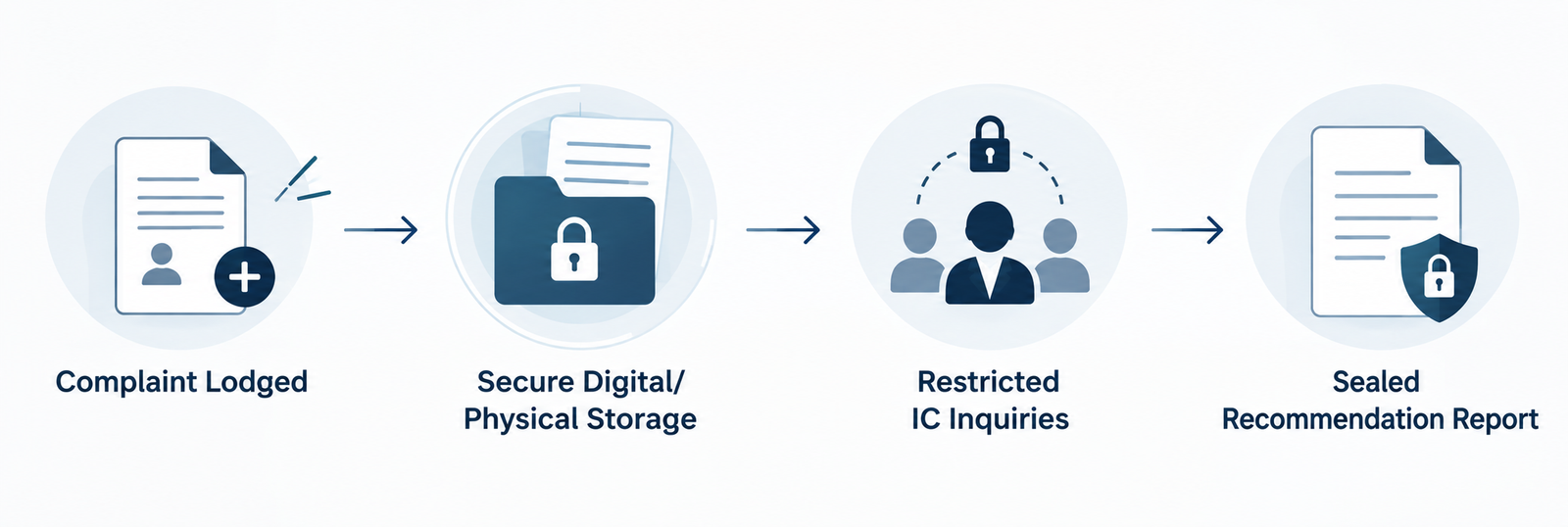
1. Secure Communication Channels
Never use unsecured personal messaging apps (like WhatsApp) to discuss case details or share investigation transcripts. Mandate encrypted, password-protected communication channels accessible only to active IC members.
2. Controlled Document Access
Maintain physical inquiry files in locked cabinets and digital files on restricted-access drives with multi-factor authentication. Limit file access logs exclusively to the presiding member and designated IC members.
3. Sensitizing Witnesses and Parties
At the onset of an inquiry, the IC must explicitly brief all participants—including the complainant, respondent, and witnesses—about their legal obligation to maintain strict confidentiality, highlighting the consequences of breaching secrecy.
4. Anonymized Reporting
When drafting annual reports or presenting metrics to the board of directors, ensure data is strictly anonymized. Aggregate metrics should reflect numbers and categories without exposing identifying details of individual cases.
Common Mistakes and Misconceptions
- Misconception: "We can share details with the department head so they can manage team workflow." Reality: Even department heads do not have an automatic right to know the specifics of a PoSH complaint unless required strictly for interim relief measures (like temporary transfer or reallocation), and even then, details must be kept on a strict need-to-know basis.
- Misconception: "Once the inquiry is closed, confidentiality rules no longer apply." Reality: Section 16 protections persist indefinitely. Archival records must remain confidential long after an inquiry concludes.
Strengthening Your Workplace Compliance Framework
Navigating the delicate balance between transparent accountability and strict confidentiality requires robust policies, trained committee members, and bulletproof procedures. Whether you are looking to audit your existing documentation, train your Internal Committee on procedural secrecy, or conduct comprehensive employee awareness sessions, structured guidance is essential.
Need Support with Your Internal Committee or PoSH Compliance?
At Poshaw, we help organizations build legally sound, secure, and respectful workplaces. From vetting your PoSH policies to providing specialized IC training and external member support, our experts ensure your compliance framework stands up to legal scrutiny.
- Email: info@poshaw.in
- Phone: +91 9773831359 / +91 9999415757
- Website: https://poshaw.in