
 WhatsApp
Statutory compliance represents the legal minimum, not the ceiling of workplace safety. Under India's Sexual Harassment of Women at Workplace (Prevention, Prohibition and Redressal) Act, 2013 (POSH Act), statutory protections explicitly safeguard women. This targeted focus addressed long-standing systemic inequities, historical power imbalances, and physical security risks in professional environments.
However, modern Indian enterprises operate in an evolving talent ecosystem. Distributed teams, non-binary and transgender inclusion, hybrid schedules, and cross-entity vendor partnerships create workplace dynamics that statutory frameworks alone do not fully cover. Forward-thinking organizations are recognizing that protecting only a portion of their workforce leaves critical operational, legal, and cultural gaps.
Expanding anti-harassment frameworks to cover all employees—regardless of gender identity—is rapidly becoming the standard for progressive employers across India.
Statutory Baseline vs. Modern Organizational Reality
The POSH Act defines an "aggrieved person" exclusively as an aggrieved woman under Section 2(a). While parliament continues to debate potential legislative amendments to broaden statutory definitions, employers do not need to wait for legislative changes to protect their entire workforce.
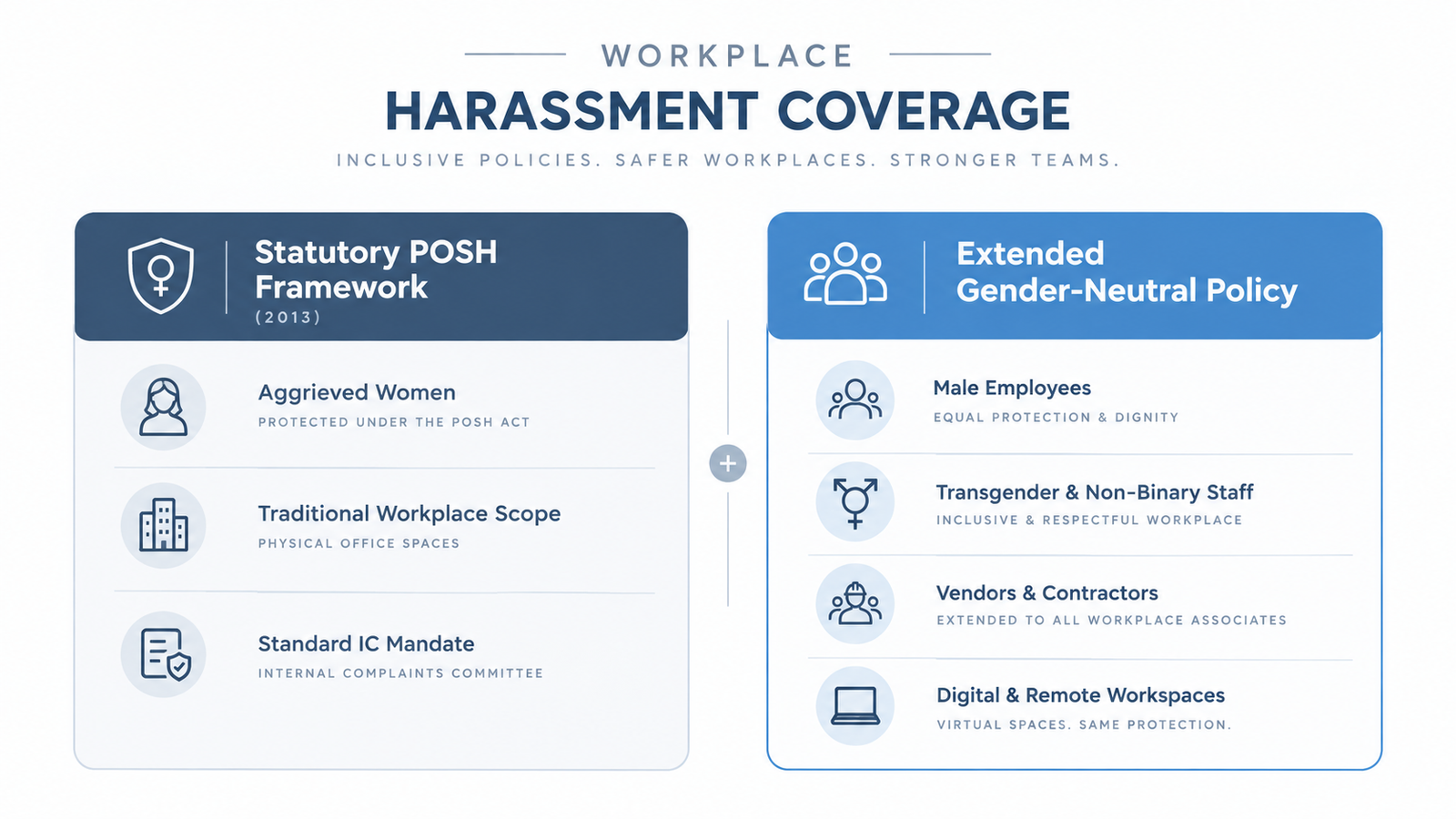
Three core realities drive the transition toward gender-neutral harassment governance:
- Universal Vulnerability: Male employees and transgender or non-binary staff can experience harassment, coercion, digital stalking, or hostile work environments. Without a dedicated reporting mechanism, these individuals often suffer in silence or resign without recourse.
- Statutory Harmony with Other Indian Laws: India's Transgender Persons (Protection of Rights) Act, 2019 explicitly mandates that no establishment shall discriminate against any transgender person in employment or work conditions. A gender-inclusive harassment mechanism brings corporate policy into direct alignment with this statutory requirement.
- Expanded Jurisdictional Realities: Judicial precedent reinforces that workplace protections extend across organizational boundaries. In Dr. Sohail Malik v. Union of India (2025), the Supreme Court of India held that an Internal Committee (IC) constituted at an aggrieved person's workplace has jurisdiction to conduct a fact-finding inquiry even when the respondent belongs to a completely different organization or government department. This highlights the need for corporate policies that account for third-party contractors, remote communication channels, and cross-functional teams.
Core Pillars of a Dual-Layer Anti-Harassment Governance Model
Employers cannot simply alter statutory POSH language, because doing so might dilute statutory protections guaranteed to women under the 2013 Act. Instead, best practice involves implementing a Dual-Layer Governance Model: maintaining strict compliance with the POSH Act for women while establishing a parallel internal policy that provides equal protections to all staff.
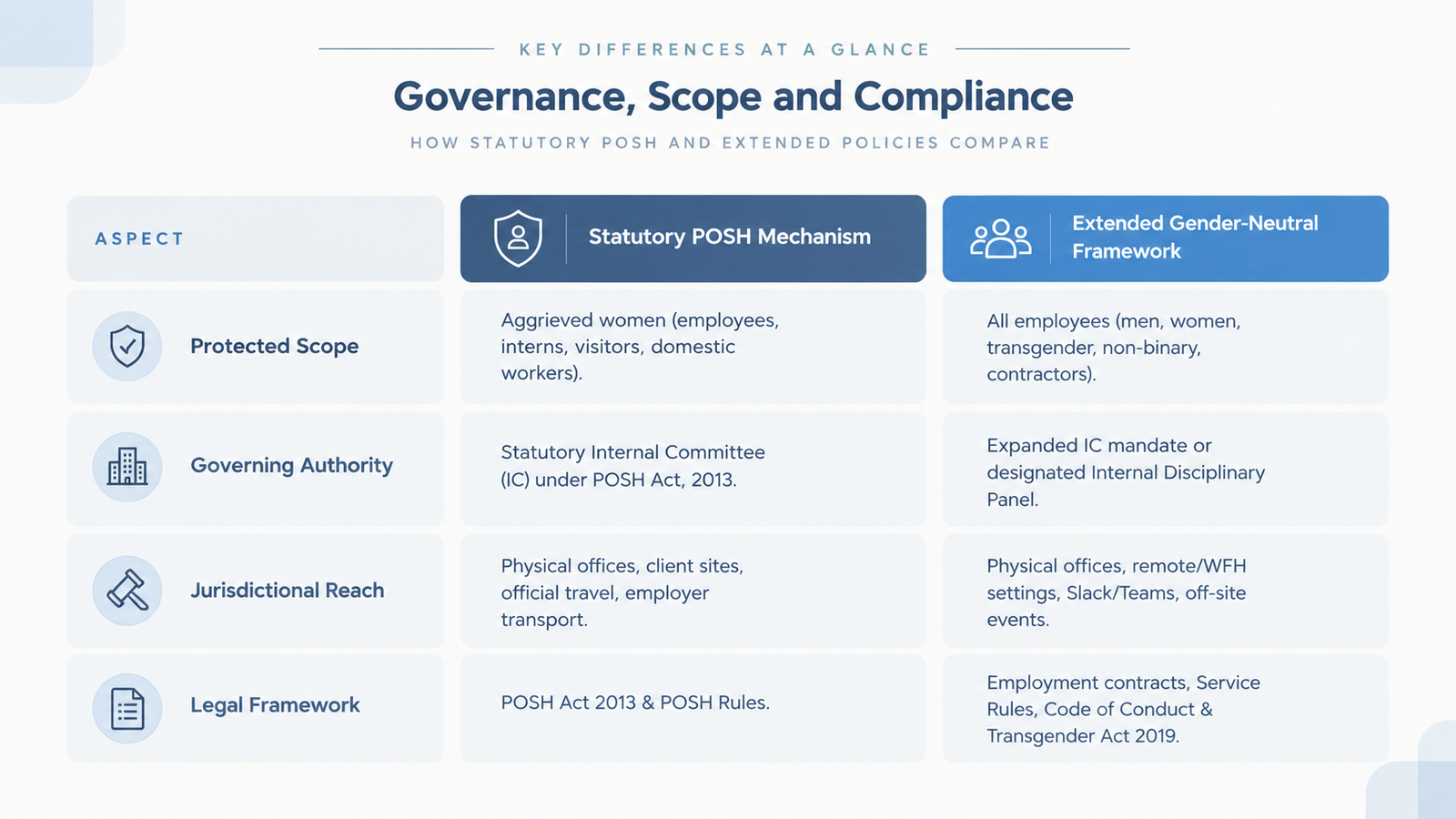
1. Broadening the Definition of Aggrieved Personnel
The extended policy should explicitly state zero tolerance for unwanted sexual conduct, intimidation, non-consensual image sharing, or verbal harassment directed at any individual, regardless of gender identity.
2. Equal Access to Time-Bound Redressal
Every employee must have access to a clear, confidential, and unbiased reporting mechanism. Inquiries under the extended internal framework should mirror the principles of natural justice, ensuring fair hearings, protection against retaliation, and strict timelines for inquiry completion.
3. Comprehensive Digital and Hybrid Workplace Scope
Harassment frequently occurs beyond traditional office walls. Corporate policies must explicitly define the workplace to include:
- Remote work and Work-From-Home (WFH) setups.
- Virtual communication platforms including Slack, Microsoft Teams, WhatsApp, and official email.
- Off-site client visits, work trips, official social dinners, and industry conferences.
4. Inclusive Representation in Inquiry Bodies
Organizations should build inquiry panels that reflect demographic diversity. Including male, female, and non-binary representation on internal review boards ensures that all parties feel understood and evaluated without subconscious bias during proceedings.
Practical Roadmap for HR and Legal Leaders
Transitioning to a comprehensive, gender-neutral anti-harassment model requires structured execution:
- Conduct a Compliance Audit: Review current employment handbooks to verify that statutory POSH procedures for women remain completely intact while adding parallel conduct guidelines for all staff.
- Execute Multi-Tiered Training: Move beyond basic compliance videos. Conduct annual awareness sessions covering consent, digital boundary management, non-discrimination, and cross-gender workplace etiquette.
- Establish Third-Party Protocols: Draft clear operational protocols for managing complaints involving vendors, consultants, or client personnel, reflecting cross-entity inquiry standards.
- Standardize Fair Inquiry Procedures: Apply procedural fairness across all internal inquiries. Document clear guidelines for interim relief, evidence collection, and disciplinary escalations to protect both complainants and respondents from administrative bias.
Organizational Benefits Beyond Legal Risk Mitigation
Overhauling workplace governance to protect all employees delivers measurable operational advantages:
- Psychological Safety: Employees perform better when they know their physical and psychological well-being is safeguarded by company policy.
- Talent Retention: Progressive, inclusive work environments attract top-tier talent and reduce costly voluntary turnover.
- Brand Integrity: Proactive governance prevents internal grievances from escalating into high-profile disputes or public relations challenges.
Strengthen Your Workplace Compliance Framework
Navigating statutory POSH requirements while building modern, inclusive harassment policies requires specialized legal and operational expertise. Implementing an extended gender-neutral policy ensures your organization remains fully compliant under the POSH Act 2013 while upholding safety standards for every employee.
At Poshaw, we partner with employers, HR leaders, and legal teams across India to design custom anti-harassment policies, constitute compliant Internal Committees, provide certified external members, and deliver comprehensive workplace training.
- Website: www.poshaw.in
- Email: info@poshaw.in
- Phone: +91 9773831359 | +91 9999415757